Age marks and small parts: a guide for parents
The age mark on a LEGO® set is one number, and it doesn't tell you about small parts. Our data carries the mark and not the warning, so I'd read the box before it goes near a house with a toddler.
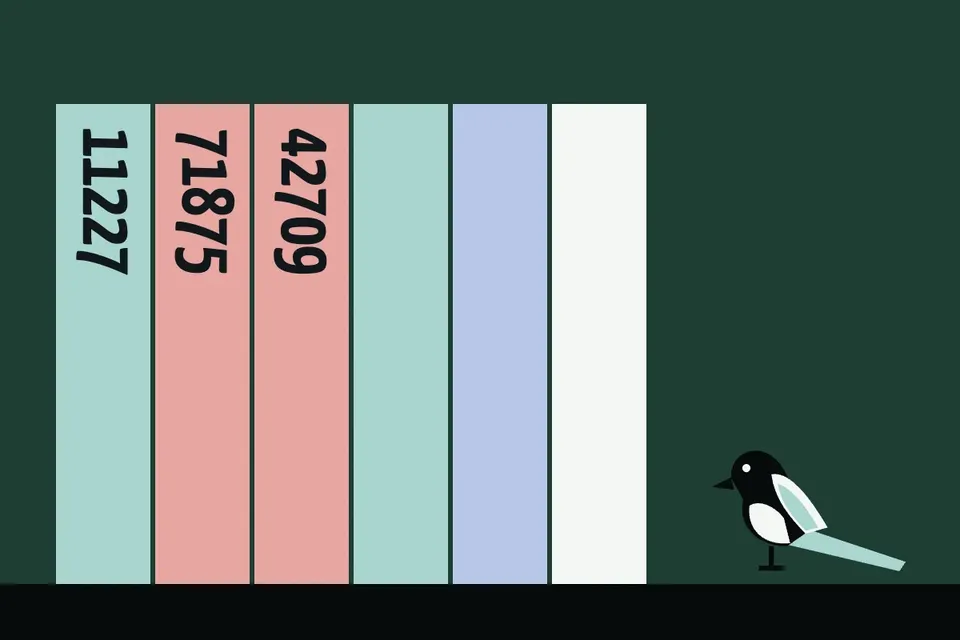
We can tell you the age mark on every set we track. We can't tell you what small-parts warning is printed on its box. Our data comes from LEGO.com's listing pages, and the warning field there is empty for every set we read. So this guide explains what the two things are, and where you have to go and look yourself.
Three marks, three sets
Here are three sets arriving in January 2027, checked 3 Nov 2026.
Set | Age mark | Pieces |
|---|---|---|
4+ | 133 pieces | |
6+ | 153 pieces | |
7+ | 366 pieces |
The Gabby's set has the lowest mark among the 80 sets we track. Most of the catalog sits at the other end: 55 of the 80 are marked 18+. You can see them all on the tracker, and our gift list sorts six child-friendly sets by budget.
What the mark is
Read it as the maker's stated audience. US rules treat it that way too. Under 16 CFR 1500.19, a manufacturer's stated intent, "such as the age stated on a label", is one factor in deciding who a toy is intended for. Regulators can weigh other factors as well.
It isn't a measure of your child. A careful six-year-old and a chaotic six-year-old aren't the same customer, and only you know which one you've got. That's opinion, but I'd hold to it. I'd also treat the mark as a floor for a gift, since going below it means choosing against the maker's own stated audience.
What the US rules say about small parts
This section covers US rules only, because those are the ones we read. UK and EU toy rules are separate, and we haven't read them.
The US Consumer Product Safety Commission defines a small part as any object that fits, without compressing and in any orientation, entirely into its small parts cylinder. The CPSC says the cylinder approximates the fully expanded throat of a child under three. A small part can be a whole toy, a separate piece of one, or a bit that breaks off in testing.
Children's products intended for under-threes that present that hazard are banned. The labelling rule covers the next band up. Under 16 CFR 1500.19, a toy or game intended for children at least three but under six must carry a cautionary statement if it includes a small part.
Look at what that band leaves out. A box marked 4+ falls inside it. One marked 6+ or 7+ falls outside this particular clause. So on my reading, finding no choking statement on a box marked for older children doesn't mean the pieces are large. I'm not telling you what's printed on these three boxes, because we don't know.
Younger siblings
This is where I'd spend your attention. The US small parts rule says plainly that it does not apply "to all articles to which children under 3 years of age might have access simply because of presence in a household". The rule looks at who a product is for, and your living room floor isn't part of that test.
A set bought for a seven-year-old sits in a house with a toddler all the same. My own advice, and it's opinion:
- Build older children's sets at a table the younger one can't reach.
- Keep loose pieces in a lidded box, up high.
- Count the small accessories back in after play, if your older child will put up with that.
History backs the general point. In a notice dated 10 November 1986 and held in the CPSC database, McDonald's and the CPSC asked customers with children under three to exchange LEGO Building Sets given out at its restaurants for DUPLO sets. The notice says the package carried a front-panel warning and that no incidents had been reported. There's more in what official recall records say.
What to do before you buy
Read the box in the shop, or the product page online, for the warning wording in your country. We can't do that step for you yet: LEGO.com's product pages refuse our script, and we don't work around that. All three above are January arrivals. The January 2027 roundup covers the Gabby's and NINJAGO sets, and LEGO's Friends press release confirms 1 January 2027 for set 42709.
Sources
- US CPSC: Small Parts Ban and Choking Hazard Labeling
- Legal Information Institute: 16 CFR 1500.19, misbranded toys
- Legal Information Institute: 16 CFR 1501.2, scope of the small parts rule
- CPSC recalls API: search for LEGO, including the 1986 McDonald's notice
- LEGO Group press release: LEGO Friends Heartlake Unicorn Cafe and 2027 sets
- LEGO.com: coming soon listing, source of the age marks for sets 11227 and 71875